Why am I showing you a photo of my dead lawn? So you can compare and contrast it with my drought tolerant lawn.
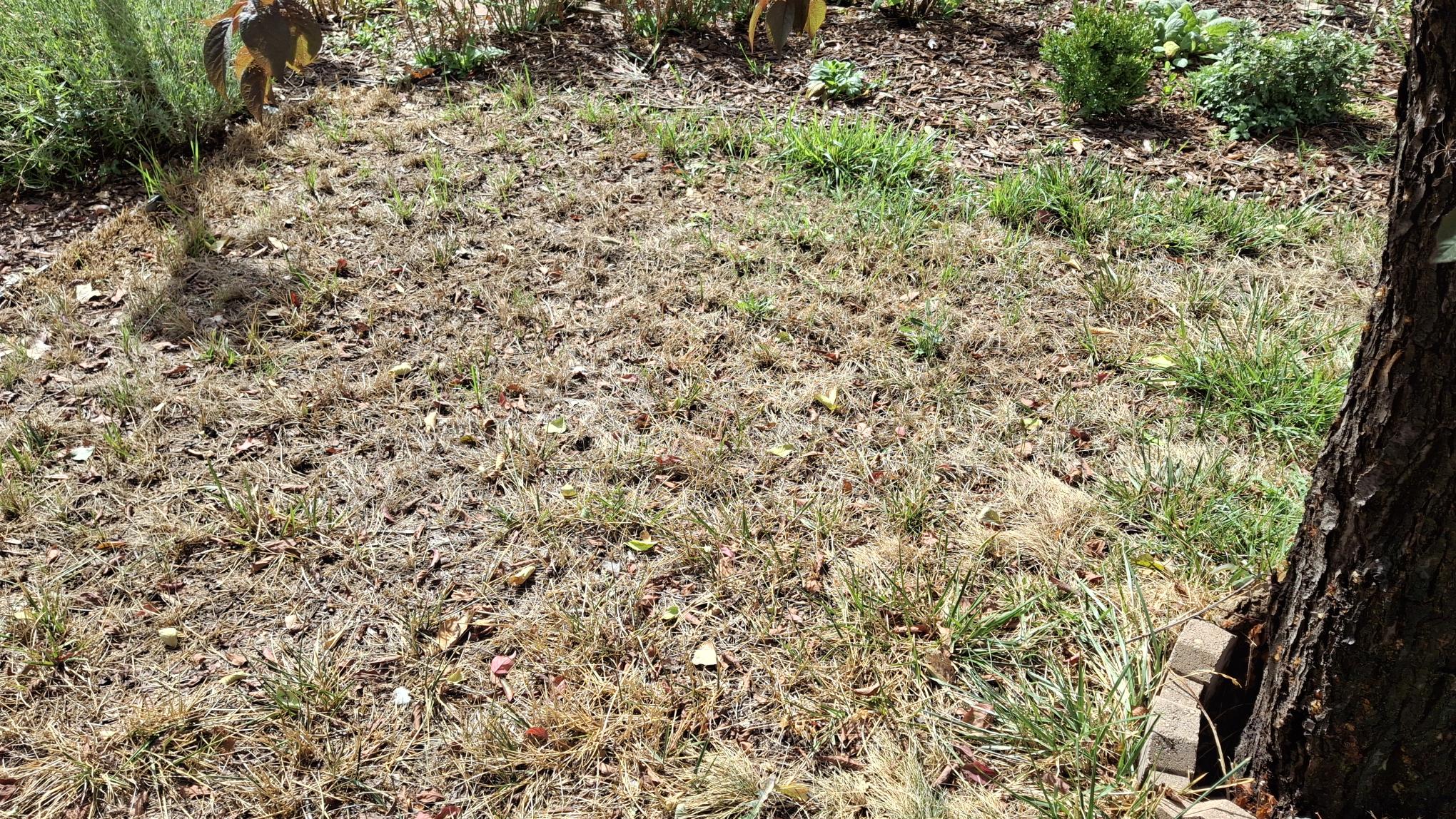
The photo above is the small patch of lawn in my front yard. A mix of blue grass and fescue that was here when I purchased the home. You can see why I removed three-quarters of it and replaced it with a drought tolerant native perennial garden.
I have amended the soil in this section, overseeded and fertilized. Still, during the drought this year, it looks like this.
Compare that to this lawn:
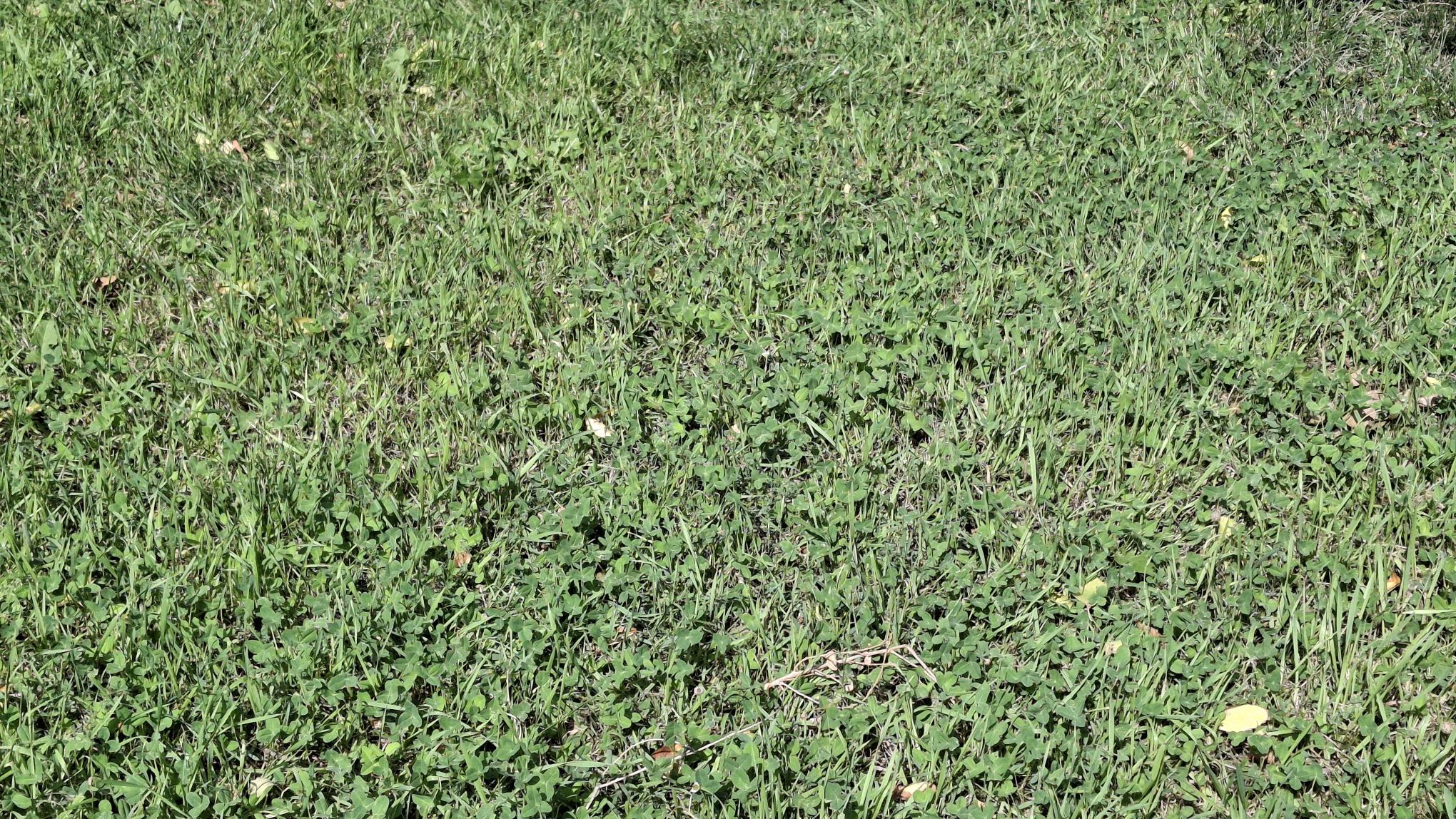
This is my backyard. It was pretty bare when I moved in and I took care to amend the soil and then the hunt was on for a lawn that would stand up to Great Danes. What I settled on was a grass seed developed especially to be drought tolerant and playground tough. It’s called Black Beauty, a mixture of blue grass, rye grass and tall fescue. It was recommended by local landscapers. To that I’ve added a large quantity of white clover. Between the two, the lawn has stayed cool and lush with minimal water.
Both lawns received the same amount of water – deep watering once a week to meet our strict water conservation requirements. The front lawn was really only watered to make sure the trees and roses were watered. And it probably got a bit more water while the perennial garden was watered.
I’m a big proponent of getting rid of lawns except where it makes sense. And with a bunch of animals who enjoy the backyard, this lawn makes sense for us. This fall, the front patch will get white clover plugs I’m growing, and some red clover winter crop, to help the soil. I’ll overseed with the black beauty seed if it looks like we’ll get some rain. But I don’t want to waste more water on it to get seed to germinate if the drought continues.
Eventually, when the plum tree finally has to be removed, I’ll decide how to revamp that section while adding an apple tree.


 Living Lightly