It began innocently enough with laying out an outline of what might be nice and a promise I’d think about it for a while. Two weeks later, phase 1 was completed.
This was the before:
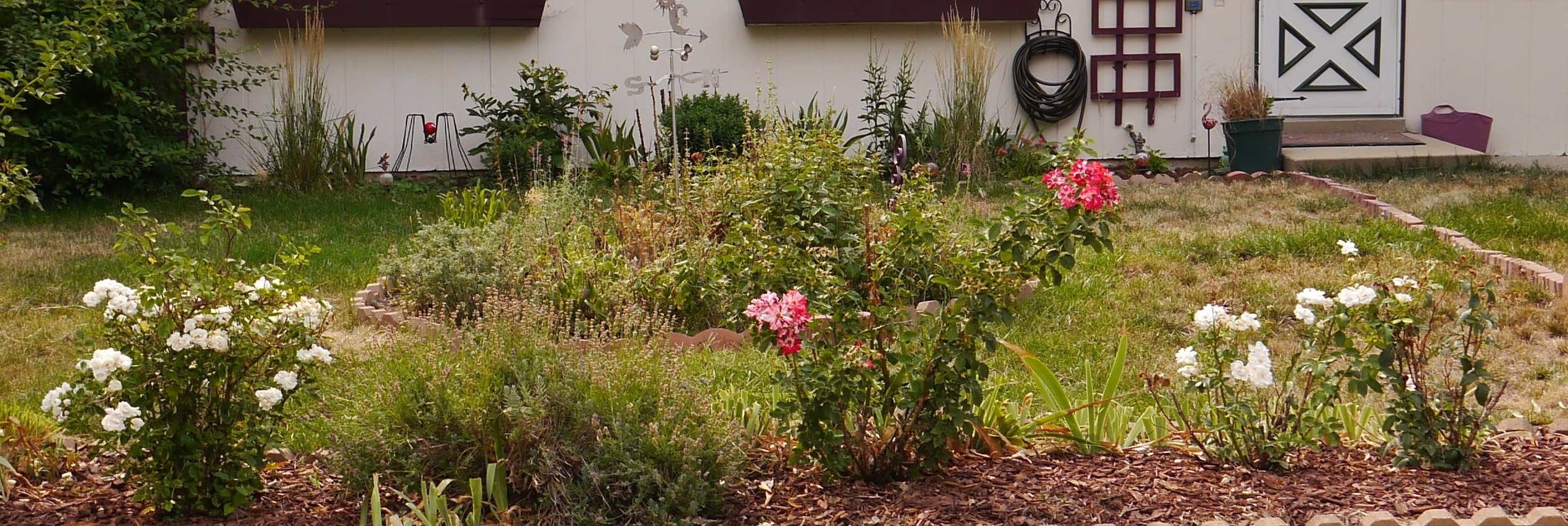
My goal was to create an excellent soil base to replace what is now pretty much cement hard clay. The previous owners used a chemical lawn service for at least a decade, that left the soil depleted and hard as a rock. The first four years, I had been amending it with compost, manure and aeration. A record drought in the summer proved that none of those measures were enough to reinvigorate the lawn and the soil was still like granite. And that was the final straw. Something had to be done.
I had several choices: use chemicals to kill (just no), or a bobcat to scrape, the grass and bring in a large amount of good soil and replant the grass, or add sod, or xeriscape. I was definitely leaning towards creating an area of low-water native plantings. But the cost of scraping a lawn and bringing in yards and yards of compost/soil was cost-prohibitive.
Then a bit of research led me to the Sheeting Method. Better soil would be achieved by killing the grass and weeds with a sealed layer of cardboard and mulch. Leaving an excellent base for native plants and bushes to replace the grass.
The next step was a hunt for cardboard.

Thanks to neighborhood apps, I was able to relieve multiple neighbors of their cardboard just before recycling day, so it was already flattened. They didn’t have to drive it to the recycling center, and I got several carloads of boxes.
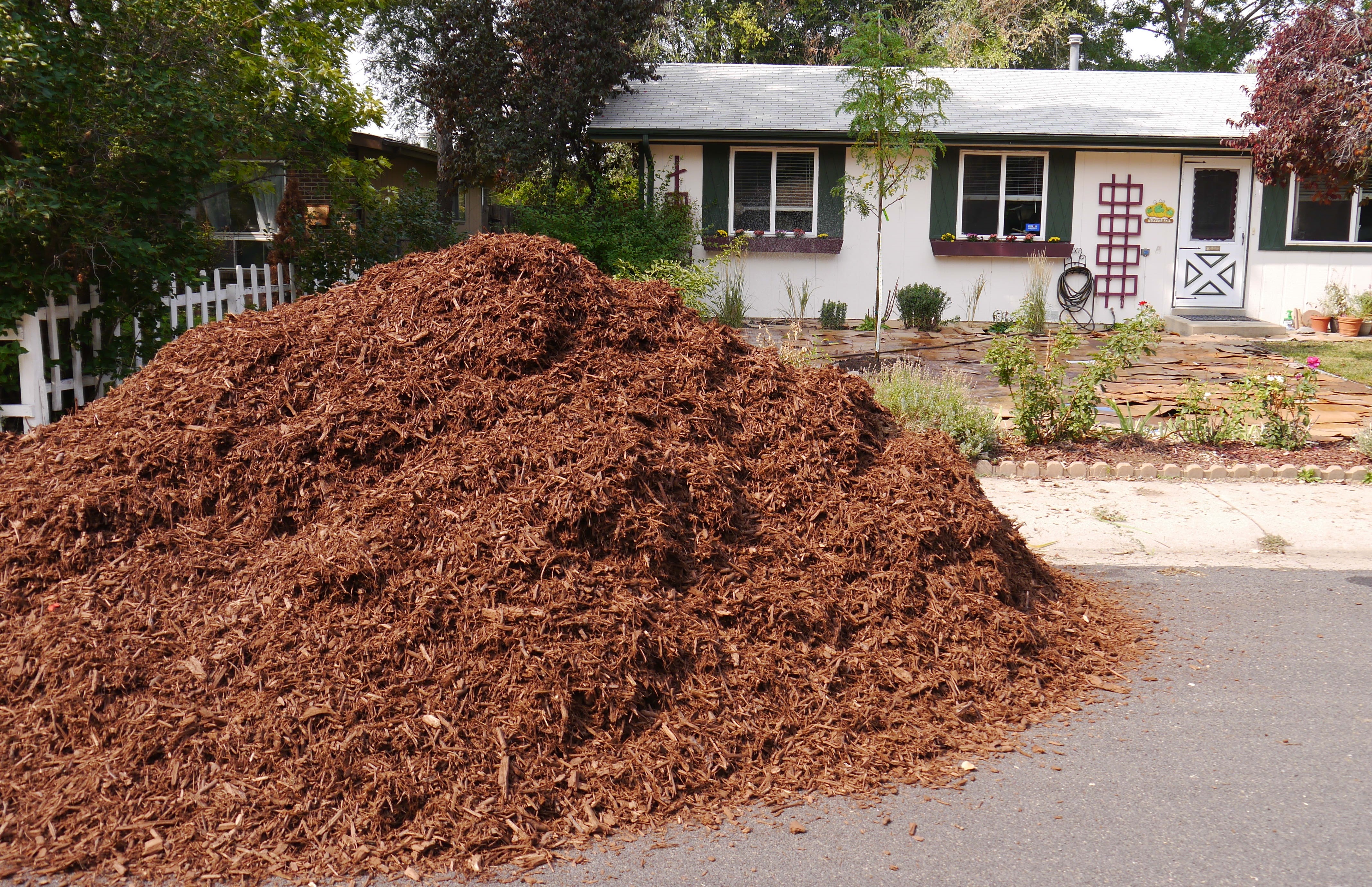
Then the fun began. My landscaper planted my new tree and delivered a heap ton of mulch. It was taller than me when it was unloaded. We had some fun with Jurassic Park and Great Dane jokes. The landscaping crew did a beautiful job, ensuring everything was well-covered to avoid any grass or weeds showing up. Six months later, I had beautiful soil under that mulch, as the cardboard decomposed and the grass composted. And soooo many worms!

This was the second summer
Eventually, a few have found their way, because “life finds a way,” especially around the tree. We did not get that full barrier effect there. But for the most part, because of the mulch, it’s been very easy to keep them under control. The few bindweed sprigs that come up are taken care of with a morning walk through with a cup of coffee and a desire to kill. Before I finish that cup, I’ve eliminated the few weeds that have cropped up. A couple areas of grass have been a bit more troublesome, but between pulling and some aggressive use of the weed trimmer, six years later, it’s been almost carefree.
Today the routine is: trim back all the dead stems in the spring, add a layer of mulch, replace the one or two plants that didn’t make it and then relax. During the dry times, I water it maybe once a week or every other week, now that everything is established. Do a weekly walk-through and enjoy. I do pull up the poppies, and deadhead the irises (they came with the house). I’d say my entire time commitment is less than an hour a week.
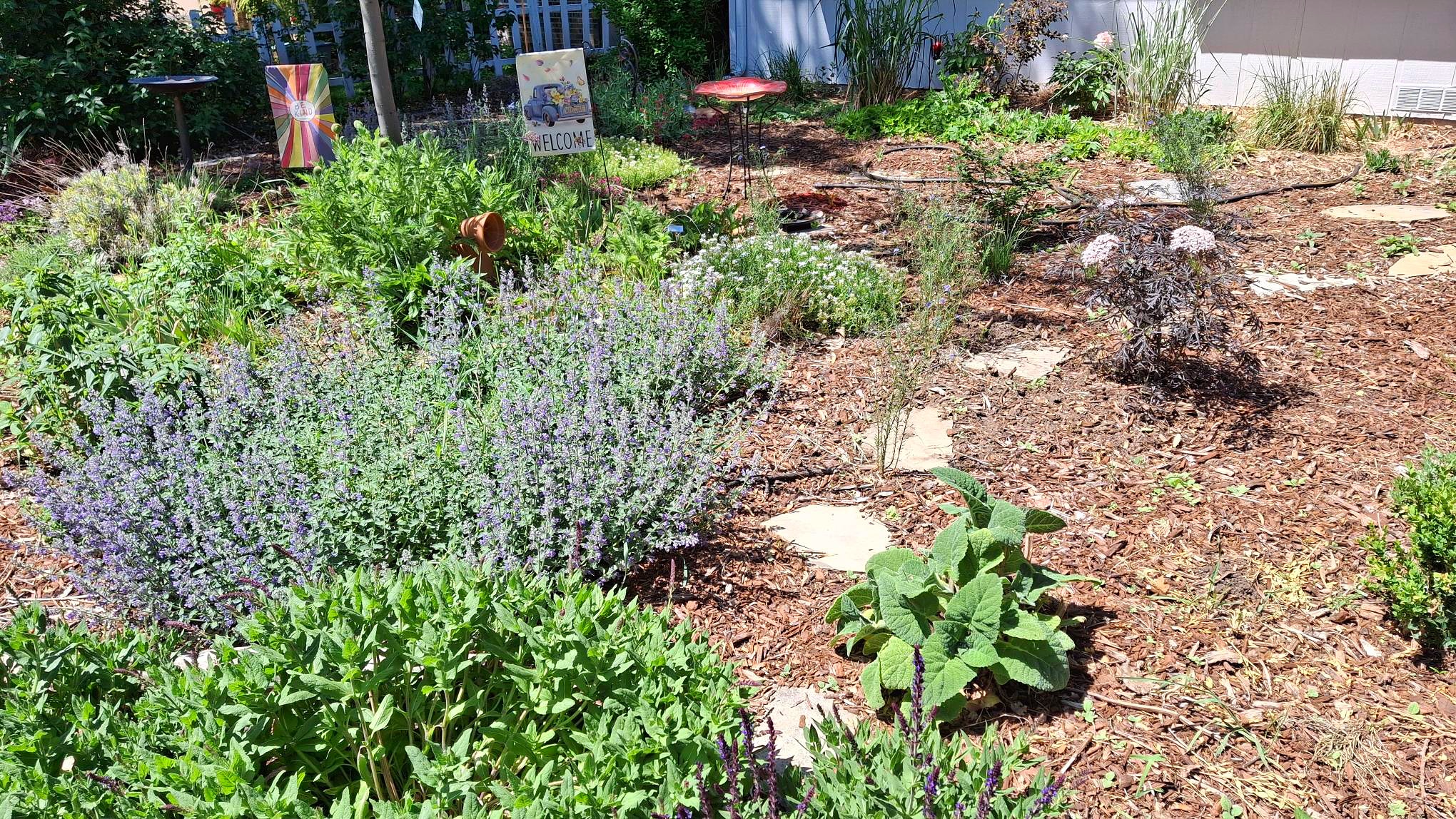
This is today. It’s early, so not much is in bloom, but in a couple of weeks, this will be full of blooms.
Every year I’ve have found one new plant I might want to add. Last year I decided I wanted an echinacea area. There are 5 different colors there now and I can’t wait to see how that turns out this year. This year, I added a black lace elderberry (upper right in the photo)because my neighbor has one and it is sooo showy. But that’s it.
Well, except for all the neighbors stopping by to say how much they love it.
Ask me anything and I’ll do my best to answer and convince you how easy this can be.


