I don’t remember when I stumbled on Beau – he describes himself as a southern journalist and his takes are thoughtful – but this morning there was this nugget I was unaware of, so I went searching for more information. This is why I’m posting a quick hit climate post this morning before I run off to take care of my long list of things-to-do today.
Here’s the announcement:
There is a lot to disseminate, but you can read more here, here, and here.
FERC’s new transmission and cost allocation rule, Order No. 1920, continues the essential work of the Commission – ensuring a reliable grid – by requiring the nation’s transmission providers to plan for the transmission we know we will need in the future.
This rule adopts specific requirements addressing how transmission providers must conduct long-term planning for regional transmission facilities and determine how to pay for them, so needed transmission is built. The final rule reflects more than 15,000 pages of comments from nearly 200 stakeholders representing all sectors of the electric power industry; environmental, consumer and other advocacy groups; and state and other government entities.
The grid rule contains these major elements:
- Requirement to conduct and periodically update long-term transmission planning to anticipate future needs.
- Requirement to consider a broad set of benefits when planning new facilities.
- Requirement to identify opportunities to modify in-kind replacement of existing transmission facilities to increase their transfer capability, known as “right-sizing.”
- Customers pay only for projects from which they benefit.
- Expands states’ pivotal role throughout the process of planning, selecting, and determining how to pay for transmission facilities.
Now back to how transforming soil and rewilding is an important part of climate solutions:
A couple of success stories.
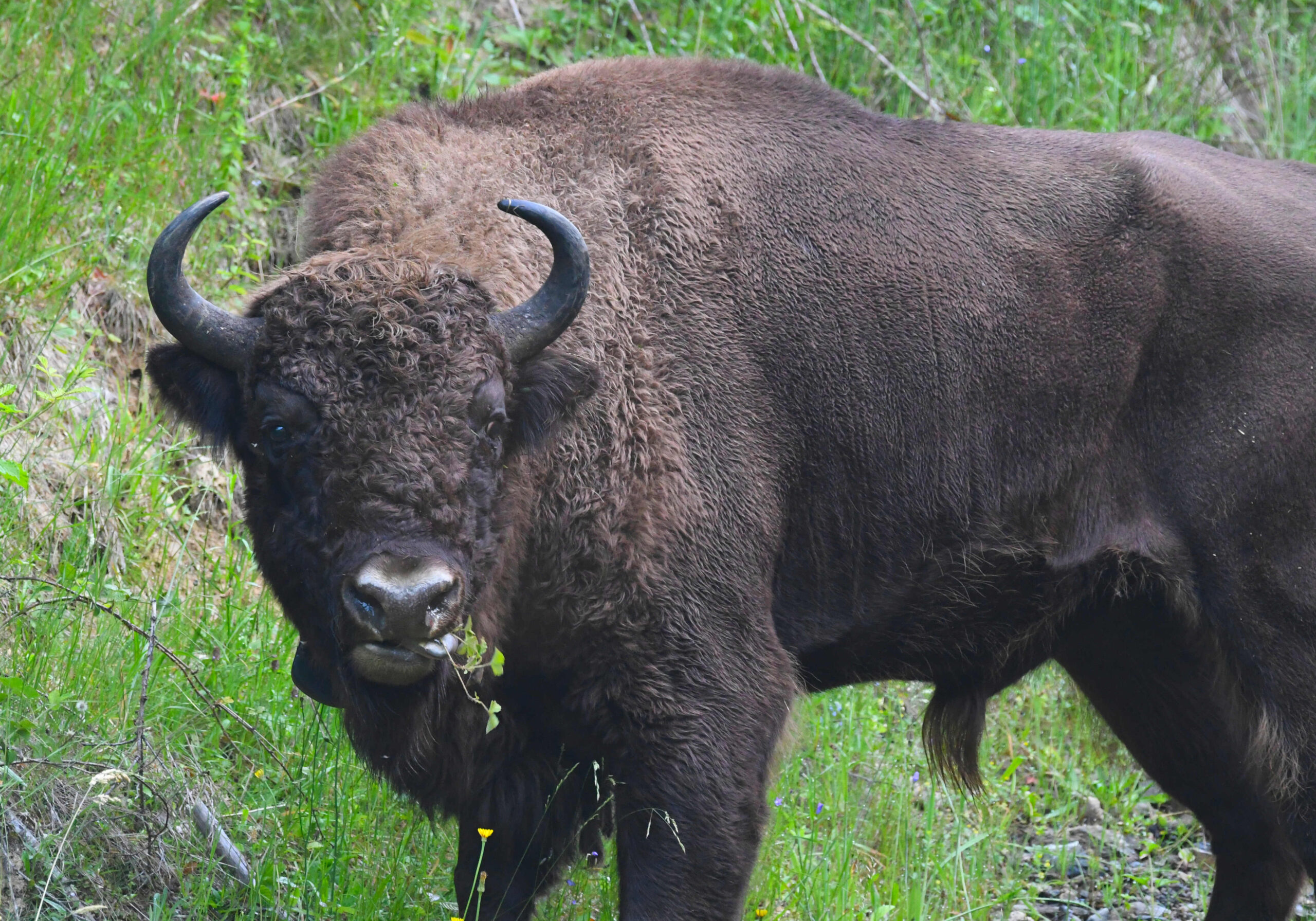
Free-roaming animals reintroduced in Romania’s Țarcu mountains are stimulating plant growth and securing carbon stored in the soil while grazing
A herd of 170 bison reintroduced to Romania’s Țarcu mountains could help store CO2 emissions equivalent to removing 43,000 US cars from the road for a year, research has found, demonstrating how the animals can help mitigate some effects of the climate crisis.
========
The European bison herd grazing in an area of nearly 50 sq km of grasslands within the wider Țarcu mountains was found to potentially capture an additional 54,000 tonnes of carbon a year. That is nearly 9.8 times more carbon than without the bison – although the report authors noted the 9.8 figure could be up to 55% higher or lower, so making the median estimate uncertain. This corresponds to the yearly CO2 released by a median of 43,000 average US petrol cars, or 84,000 using the higher figure, or a median of 123,000 average European cars, due to their higher energy efficiency, the researchers said.
A lot more information at the link on the facts behind it and the challenges.
Mossy Earth has a good video on the Bison:
Feb 18, 2023The iconic European Bison is making a comeback across the old continent. However, the question remains, do we have space for them? Are we able to co-exist with this mighty keystone species? In this video we try to explore these ideas and also lay down the foundation for a future bison project.
===========
Meanwhile in India:
Mar 12, 2024Permaculture Instructor Andrew Millison travels to the village of Laporiyah in Rajasthan India to see the 45 year water harvesting and community development project spearheaded by waterman Laxman Singh. We spent 2 days touring the village with Laxman and his team, including well known academic Vishnu Sharma. Vishnu has specialized in the revitalization of Rajasthan during his long career and we were very lucky to have him as Laxman’s interpreter. This village has experienced such an incredible transformation due to the work of the villagers, it is hard to express in one video. For my regular viewers, you will see that this is flat terrain, with very different strategies than the regularly visited hilly locations. Enjoy!
=========
Here are the last two Carbon Cowboy videos:
May 14, 2020 • CLARKESVILLEMurray Provine lived the traveling executive lifestyle until prostate cancer was diagnosed. With a focus on his personal health, he changed his 110 acre horse farm to Adaptive Multi-Paddock (AMP) cattle grazing – with the tutelage of Allen Williams. 3 years into the change, Murray and his land are in much better health. Filmed in Clarkesville, Georgia
==============
May 14, 2020 ALBERTAA research team led by ecologist Steve Apfelbaum explores 4 regenerative grazing ranches in Alberta, Canada. The ranchers were some of the very first to adopt organic farming and AMP grazing in Canada – making their ranches profitable, and a haven for wildlife. Filmed in Alberta, Canada
At their Youtube page, Roots So Deep there are many, many more videos talking with farmers, showcasing their research, and community town halls where they spread the good news and answer folks’ questions.
==========
That’s enough for today. I’m off to continue rewilding my yard (hey it’s year THREE of killing my grass – you can see the latest photos here and read an update). I’ll continue with rewilding in the next post – still want to get to what’s going on in the arctic tundra.
Doomerism is how we fail to fight for ourselves & one another.
It is how authoritarians win. Let’s try to fight the doom.
Michael Mann and Timothy D Snyder
This is a doom and gloom free zone


 Living Lightly